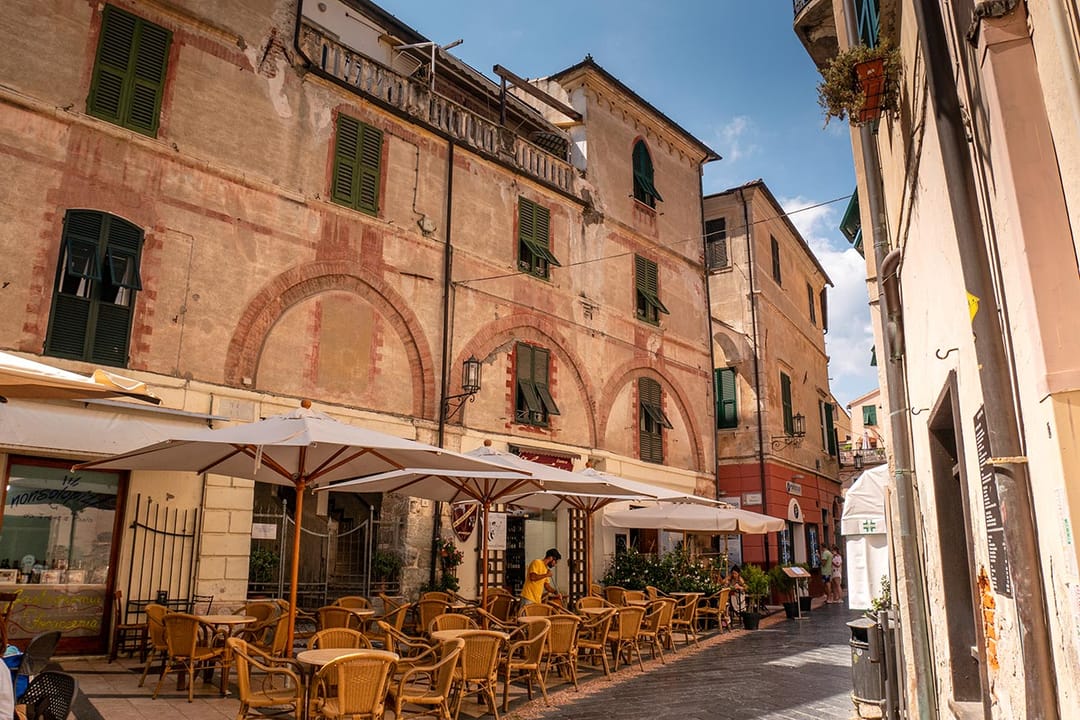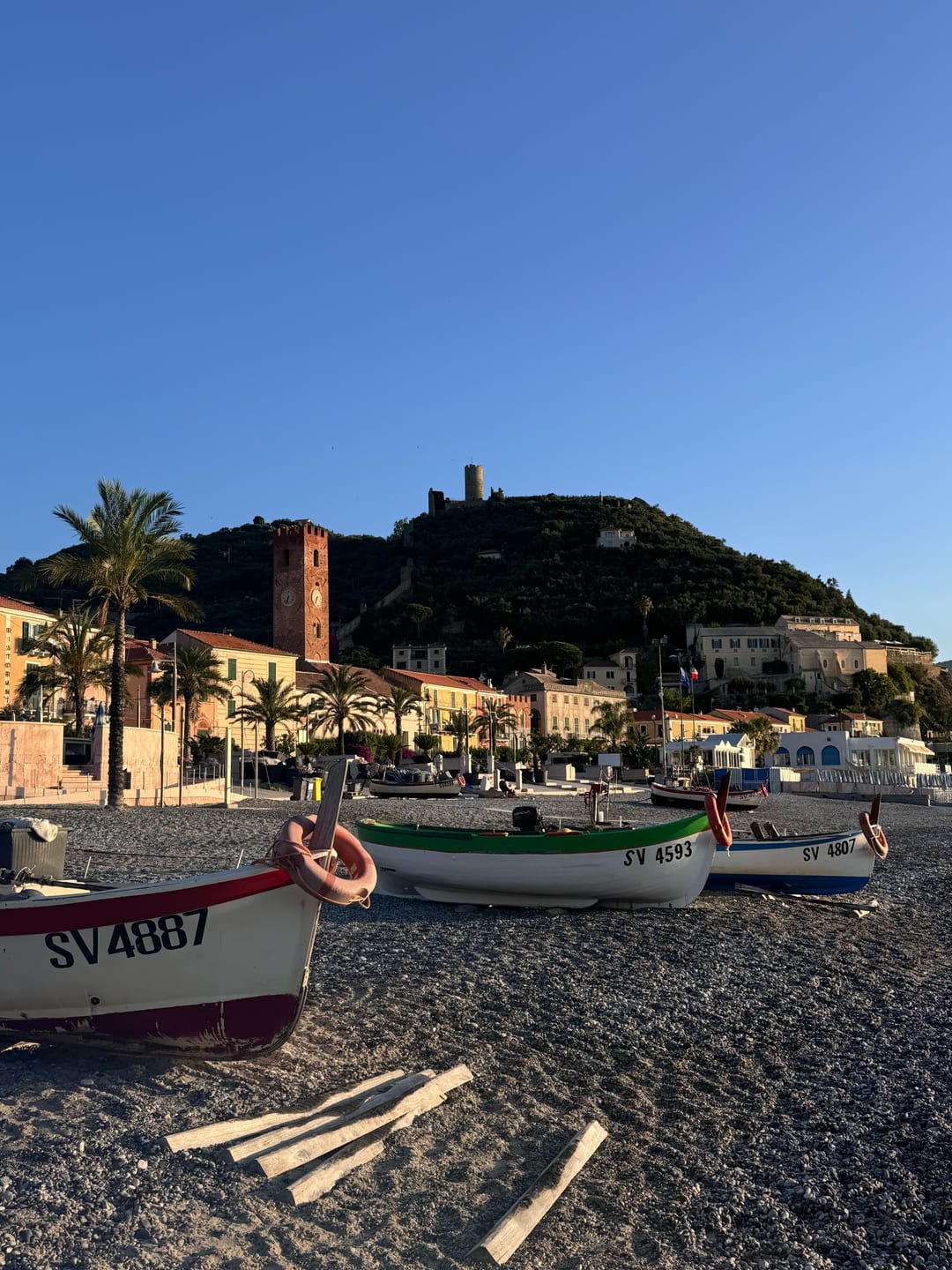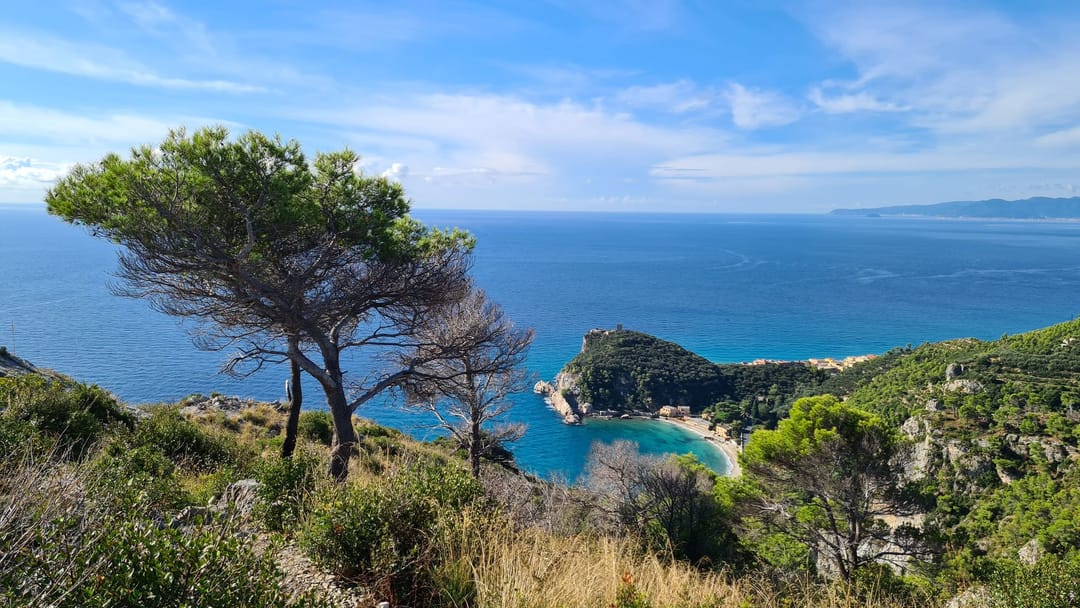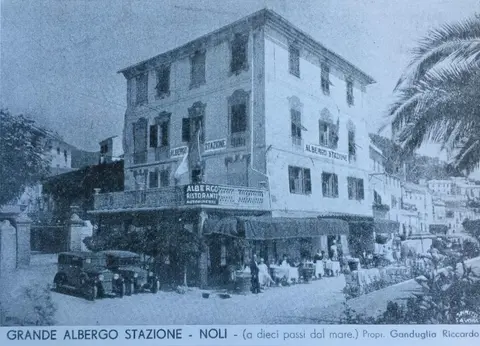
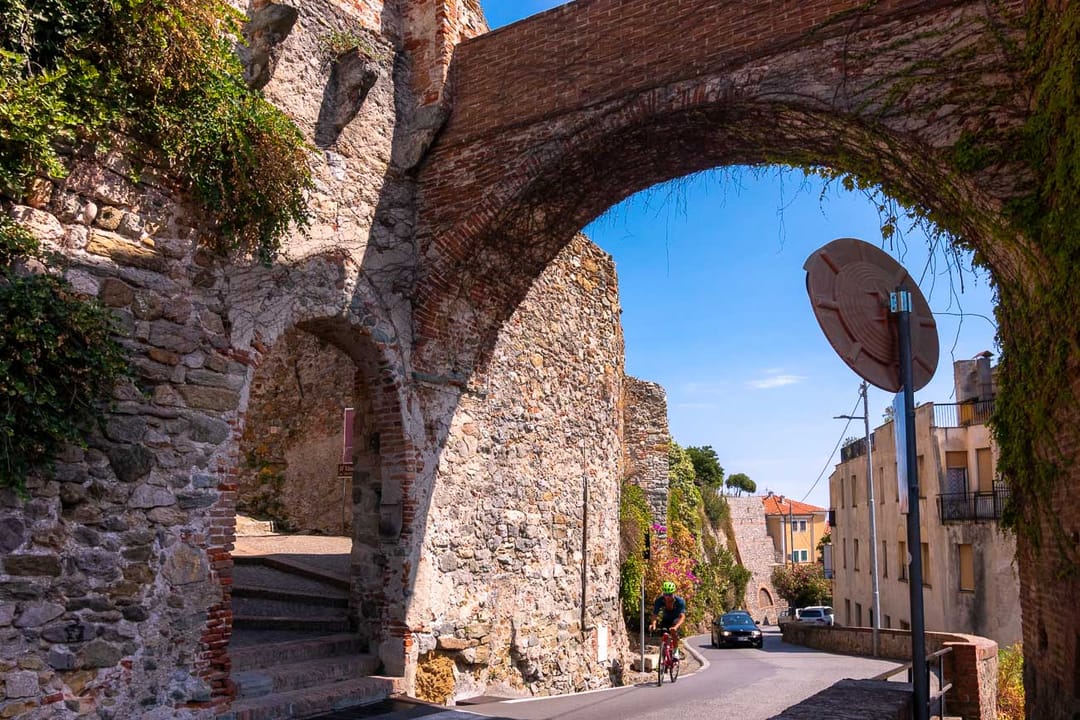
You step out of the hotel and you are already inside history. Noli is one of the best-preserved seafaring old towns in Liguria, among the Borghi più belli d’Italia (Italy’s most beautiful villages), a maze of caruggi, stone towers and carved portals, held between the sea and the walls, a few metres from the beach.
For more than five centuries Noli was a small, proud maritime republic: its independence was established on 7 August 1192, with a deed signed in the very church of San Paragorio, and lasted until 2 December 1797, with the arrival of Napoleon’s French. For much of that time Noli was an ally and protectorate of Genoa, while keeping its own internal independence; in 1239 it even became an autonomous diocese. It is traditionally remembered as the “fifth maritime republic”, the smallest and least known in Italy.
The towers and the caruggi
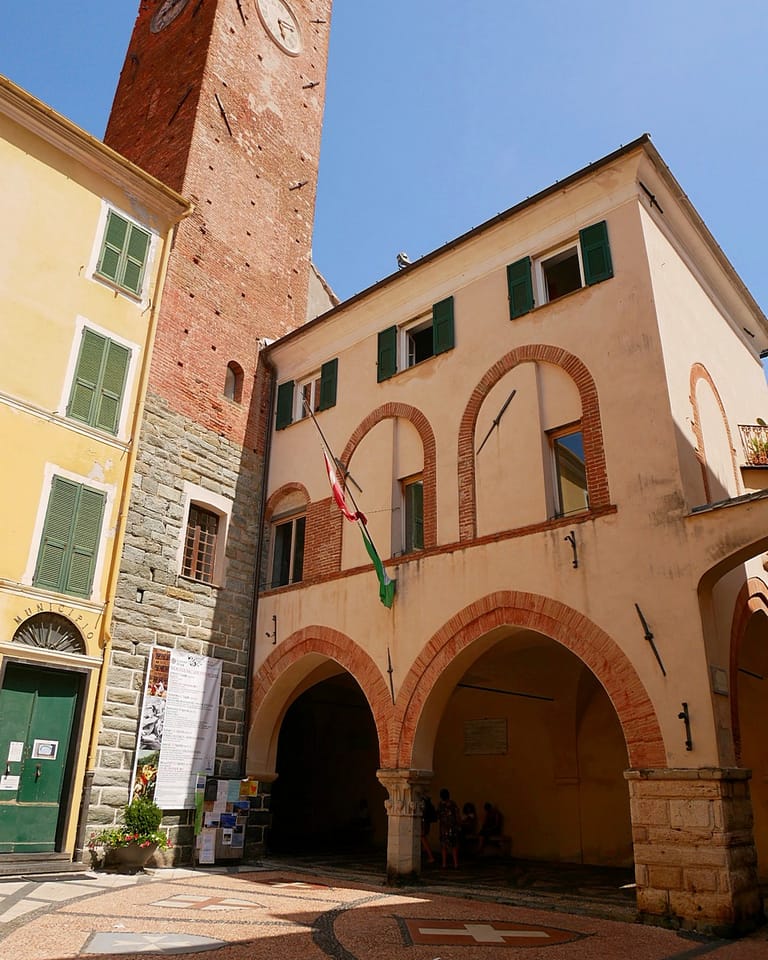
In the Middle Ages Noli counted 72 defensive towers, as many as San Gimignano. Four survive today, and they still rise above the rooftops: the Torre del Canto (or dei Quattro Canti), the tallest at 38 metres, the Torre del Comune with its swallowtail merlons, the Torre Peluffo (24 m, its top now gone) and the Torre Papone (19 m).
Below them run the carüggi: narrow, shaded lanes, often spanned by stone arches that hold the houses together, where the light falls at an angle and the air smells of the sea. You enter the old town through the Porta di Piazza, the ancient gateway in the walls, and reach the Loggia della Repubblica and the Palazzo del Comune, once the civic heart.
The castle and the churches
From above, the Castello di Monte Ursino dominates Noli and the bay: built around the 10th century against Saracen raids, today it houses a small museum and offers one of the widest views over the coast. In the town, the Concattedrale di San Pietro has been a cathedral since 1572, with its portal from 1611 and a three-nave interior.
But the oldest treasure lies just outside the walls, towards the sea: the Romanesque church of San Paragorio (11th century), a National Monument since 1890, with its crypt, three naves and the polychrome ceramic basins set into the apses. It was the cathedral of Noli until 1572.
An old town that has never changed its view: the sea, in front, for centuries.
Stories of the sea and of the districts
In the Loggia della Repubblica, beneath the Palazzo del Comune, several plaques recall the figures tied to Noli: the navigator Antonio da Noli, of Noli origin, who around 1460 reached and colonised the islands of Cape Verde for Portugal; Giordano Bruno, who stayed here in 1576; and even Dante, who names the town in the Purgatorio, «Vassi in Sanleo e discendesi in Noli».
The maritime tradition is still alive in the four districts of the old town, Burgo, Ciassa, Maina and Purtello, which every year, on the second Sunday of September, compete in the Regata Storica dei Rioni: a rowing palio on the colourful gozzi boats, preceded by a procession in medieval costume, recalling the independence of the old republic.
For a visit monument by monument, the towers, the Romanesque churches, the gates and the stone houses, there is our guide What to see in Noli.
What to see, in brief
- The four surviving towers and the caruggi with their stone arches
- The Porta di Piazza, the Loggia della Repubblica and the Palazzo del Comune
- The Castello di Monte Ursino, above the old town, with the view over the sea
- The Concattedrale di San Pietro, in the historic centre
- The Romanesque church of San Paragorio, a National Monument, outside the walls
Good to know
- WhereNoli (Savona), Riviera Ligure di Ponente
- HistoryMaritime republic from 7 August 1192 to 2 December 1797
- WhenLovely all year round; the old town is at its best outside peak hours
- On footEverything is within easy walking distance, from the hotel